
How to Claim Back Import GST (Without Losing Sleep Over It)
Importing goods into Australia for your business? You’ve probably come across something called Import GST and if you’re wondering whether you can claim it back, the answer is a confident yes
(if you’re doing it right).
Total claimable GST: $4,165.00
Let’s break it down in plain English.
What is Import GST?
When your goods arrive in Australia, the government applies a 10% tax
on the landed value of your shipment. This includes the value of the goods
plus international shipping
and insurance costs.
This tax is called Import GST
and it’s collected by Australian Border Force during customs clearance.
It’s not the same as the GST on your supplier invoice. One happens overseas; the other happens at the Australian border.
Can You Claim It Back?
Yes - if you're registered for GST
and the goods are for business use, you can claim the full Import GST amount on your next BAS (Business Activity Statement).
You can also claim any GST you’ve paid on local services like customs clearance, delivery, and port charges.
Let’s look at an example
Say you’ve just brought in a shipping container full of outdoor furniture from Vietnam.
- Commercial invoice value: AUD $35,000
- International freight and insurance: AUD $4,500
- Landed Value (for GST purposes): $39,500
🧾 Import GST:
$3,950.00
🧾 GST on your freight forwarding invoice (local clearance/delivery): $215.00
Total claimable GST: $4,165.00
That’s a solid chunk of change you can claim back, money that should be back in your business, not stuck at the border.
What You Need to Claim GST on Imports
Make sure you’ve got the paperwork sorted:
What You Need to Claim GST on Imports
Make sure you’ve got the paperwork sorted:
- A copy of the Import Declaration (N10) – this shows the GST you paid at the border
- A valid tax invoice from your local freight provider (showing GST)
- You’re registered for GST
- You include the amounts correctly in your BAS
Still Confused? We’ve Got You.
At Pivot Freight, we don’t just move your goods, we help you understand the dollars behind them. If you need help figuring out your Import GST, or you’ve lost your import documents (we’ve all been there), just ask. We’ll resend what you need and walk you through it.
Because making freight simple isn’t just our job, it’s our promise.
Ship Smarter, not harder.
Need help with your next import?
Need help with your next import?
Book a call
with us and let’s take the freight stress off your plate.
Book a call HERE Running a business that imports goods is stressful enough without having to decode shipping news every morning. War in the Middle East. Port congestion. Blank sailings. Rate surges. It's a lot of noise, and it's not always clear what actually affects you. So let me cut to what matters, especially if you're an Australian business shipping from China. Yes, Global Freight Is Complicated Right Now There's no point pretending everything is running smoothly. Conflicts in parts of the world have disrupted major shipping routes, pushed freight rates up on certain lanes, and created a ripple effect that touches even routes that aren't directly in the firing line. When global shipping lanes get congested or disrupted, Australia-bound shipments can be delayed too, since vessel capacity gets stretched thin across the whole network. Even if the conflict is on the other side of the world, there are indirect effects worth knowing about. But here's the honest answer most businesses actually need: your specific route matters enormously. And if you're importing from China to Australia, the picture is more manageable than the headlines suggest. The China to Australia Route: What's Actually Going On The main shipping lane between China and Australia doesn't pass through the conflict zones that have been making headlines. That's genuinely good news. What the route deals with are more practical, day-to-day challenges that have been building for a couple of years now. Port congestion, labour disruptions, weather events and logistical inefficiencies are the main drivers of delays on this route in 2025. Major Chinese ports like Shanghai, Ningbo and Shenzhen have been running hot. In late 2025, congestion at major Chinese ports hit a three-year high before easing somewhat, but levels remain elevated above historical norms. On the Australian side, shippers moving freight into Australia have been navigating port congestion, rolling delays and equipment shortages. Sydney, Melbourne and Brisbane have all had periods of significant congestion, particularly during peak seasons. Blank sailings and container shortages continue to affect schedules, particularly in the Asia-Australia corridor. A blank sailing is when a carrier quietly cancels a scheduled vessel departure. Your cargo is booked. Your goods are ready. And then the sailing simply doesn't happen. It's one of the most frustrating things importers deal with, and it happens more often than people realise. The Seasonal Patterns That Catch Businesses Off Guard Some disruptions on the China-Australia route are actually predictable. They happen at roughly the same time every year, and businesses that know about them can plan around them. Chinese New Year is the big one. Factories across China shut down for weeks, production halts, and freight demand spikes sharply before and after the holiday. The ripple effects include increased shipping costs and extended lead times that can disrupt even well-planned operations. There's also Golden Week in October, which causes a similar, if smaller, disruption. Pre and post-holiday slowdowns, combined with reduced port and carrier capacity, create bottlenecks. Carriers implement blank sailings during these periods, compressing cargo onto fewer sailings and causing vessel bunching at berths. Then there's typhoon season, which runs roughly from June to November. Major storms can cause temporary port closures, blank sailings and vessel diversions that add days or weeks to transit times. None of this is unmanageable. But it does require planning ahead rather than booking at the last minute. What Good Freight Management Actually Looks Like This is where having the right freight partner makes a real difference. Not because they can stop delays from happening, but because they can help you see them coming and work around them. For businesses planning shipments, success depends on accurate forecasting, proactive scheduling and close coordination with supply chain partners. A few practical things an experienced freight manager does that most businesses can't easily do on their own: They watch carrier performance regularly. Some shipping lines have been more reliable than others on the China-Australia route lately. Knowing which ones to book and which to avoid at certain times of year is the kind of knowledge that only comes from daily involvement in the market. They stay across documentation requirements. Incorrect or missing documents are one of the most common causes of customs delays on this route. A commercial invoice with the wrong details, a missing packing list, and an incorrectly declared product category. These are errors that hold shipments at the border and cost money. Getting it right the first time matters. They built in realistic buffers. Industry practice is to add 7 to 10 days of buffer time to quoted transit times, particularly during known disruption periods. If your freight partner is telling you everything will arrive exactly on the quoted date with no margin for error, that's not confidence. That's wishful thinking. They know the difference between a real problem and market noise. A lot of shipping news creates anxiety without being directly relevant to your specific lane and cargo type. Someone who lives in this space daily can tell you quickly whether a particular headline actually affects your next shipment or not. Planning Ahead Is the Biggest Advantage You Can Give Yourself Businesses are advised to plan shipments two to three weeks in advance to avoid disruptions, particularly during peak seasons. That might sound simple, but it's genuinely one of the most impactful things importers can do. Booking late means you're competing for whatever space is left, often at higher rates and with less choice of carrier. Booking early gives your freight manager room to move if something changes. A good freight management partner will also map out your shipping calendar with you. They'll flag the Chinese New Year window, the peak season surge, the periods when space tightens up. That kind of forward visibility means fewer surprises and more control over your supply chain. For Australian importers who want to stay informed on the compliance side, the Australian Border Force publishes import guidance and cargo reporting information at abf.gov.au , which is worth having bookmarked. The Bottom Line for Australian Importers Global freight is noisier and less predictable than it was a few years ago. Some of that is driven by world events. Some of it is just the nature of a high-volume trade route with a lot of moving parts. The China to Australia route is not the most disrupted lane in the world right now. But it does have its own challenges, and those challenges are real enough that going in without proper support is a risk that isn't worth taking. The businesses that manage this well aren't the ones with the best luck. They're the ones who plan early, work with people who know the route, keep their documentation clean and don't treat freight as an afterthought until something goes wrong. That's really what a good freight management partner is there for. Not miracles. Just experience, applied consistently, so your goods keep moving. Contact us if you have any questions regarding your freight management Book a call HERE

Australia and the European Union (EU) launched negotiations for a Free Trade Agreement back in 2018. As of 24 March 2026, negotiations have now officially concluded - announced by Prime Minister Anthony Albanese and European Commission President Ursula von der Leyen. This marks a major milestone in opening trade between Australia and one of the world’s largest and wealthiest markets. But before you start reworking your supply chain or pricing… Let’s break down what this actually means in practice. What is the Australia–EU Free Trade Agreement? The Australia–EU Free Trade Agreement (A-EU FTA) is a comprehensive trade deal designed to: Reduce or eliminate tariffs Improve market access Simplify trade processes Strengthen economic ties between Australia and the EU The European Union represents a market of ~450 million consumers, making it a significant opportunity for Australian businesses. The Headline Everyone’s Talking About Once implemented: 👉 Up to 98% of Australian exports are expected to enter the EU duty-free This is a strong signal for export growth — particularly for businesses looking to expand beyond Australia or diversify markets. Important: This Is Not Live Yet While negotiations have concluded, the agreement is not yet in force. Before it becomes operational, it must go through: Legal finalisation (“legal scrubbing”) Formal signing Ratification by the EU and Australia Given the EU’s structure, this process can take time. 👉 Realistically, we are still 1–2 years away from implementation That means: No immediate tariff changes No changes to customs processes yet No impact on current shipments What This Means for Australian Exporters This is where the biggest opportunity sits. 1. Reduced Tariffs into Europe Australian exporters will benefit from lower or eliminated tariffs across: Agricultural goods (e.g. beef, lamb, dairy — subject to negotiated quotas) Processed foods Manufactured goods Environmental goods 👉 This improves competitiveness and margin when entering EU markets. 2. Access to a High-Value Market The EU is a high-income region with strong demand for: Premium products Sustainable and ethically sourced goods High-quality manufacturing 3. Improved Market Access for Services The agreement also reduces regulatory barriers for: Professional services Logistics and supply chain providers Digital and technology services 👉 This creates long-term strategic opportunities beyond physical goods. What This Means for Australian Importers The impact here is more subtle — and often misunderstood. 1. Limited Tariff Savings Australia already applies relatively low or zero tariffs on many EU imports. 👉 So this deal is unlikely to significantly reduce landed costs for most importers. 2. The Real Benefit: Simpler Processes Where importers will see value: More consistent rules of origin Clearer documentation requirements Reduced administrative friction 👉 Translation: smoother shipments, fewer surprises — not necessarily cheaper freight. The Part Most Businesses Get Wrong ❌ “Everything becomes duty-free overnight” Only applies once the agreement is in force — and only if origin rules are met. ❌ “This applies immediately” It doesn’t. Implementation is still at least 1–2 years away. ❌ “Tariff-free means easy” The EU still has strict requirements, including: Product compliance (e.g. CE marking) Environmental and chemical regulations (e.g. REACH) Labelling and safety standards 👉 These can create more friction than tariffs if not managed properly. What Should You Be Doing Now? This is not a “wait and see” moment — it’s a prepare and position moment. For importers: Start exploring EU suppliers Compare EU vs Asia sourcing strategies Understand compliance requirements early For exporters: Assess whether your product is competitive in the EU Review pricing and margin opportunities Understand entry requirements and certifications For both: Get clear on landed cost structures Review documentation and origin requirements Build relationships before demand increases Final Thoughts The Australia–EU Free Trade Agreement is a major step forward in global trade — but it’s not an overnight shift. For exporters, it represents significant growth potential. For importers, it offers greater consistency and ease of doing business. The real advantage will go to businesses that start preparing now — not the ones who wait until it’s live. Need Help Navigating It? If you’re considering importing from or exporting to Europe, now is the time to understand: Landed costs Compliance requirements Supplier and market strategy Because when this agreement comes into effect, the businesses that are ready will move first. Sources & Further Reading Australia Government – Export Market Opportunities (EU): https://export.business.gov.au/find-export-markets/europe-export-opportunities European Commission – EU-Australia Trade Agreement: https://policy.trade.ec.europa.eu/eu-trade-relationships-country-and-region/countries-and-regions/australia_en Australian Department of Foreign Affairs and Trade (DFAT): https://www.dfat.gov.au/trade/agreements/not-yet-in-force/aeufta European Union Market Overview: https://european-union.europa.eu/principles-countries-history/eu-countries_en

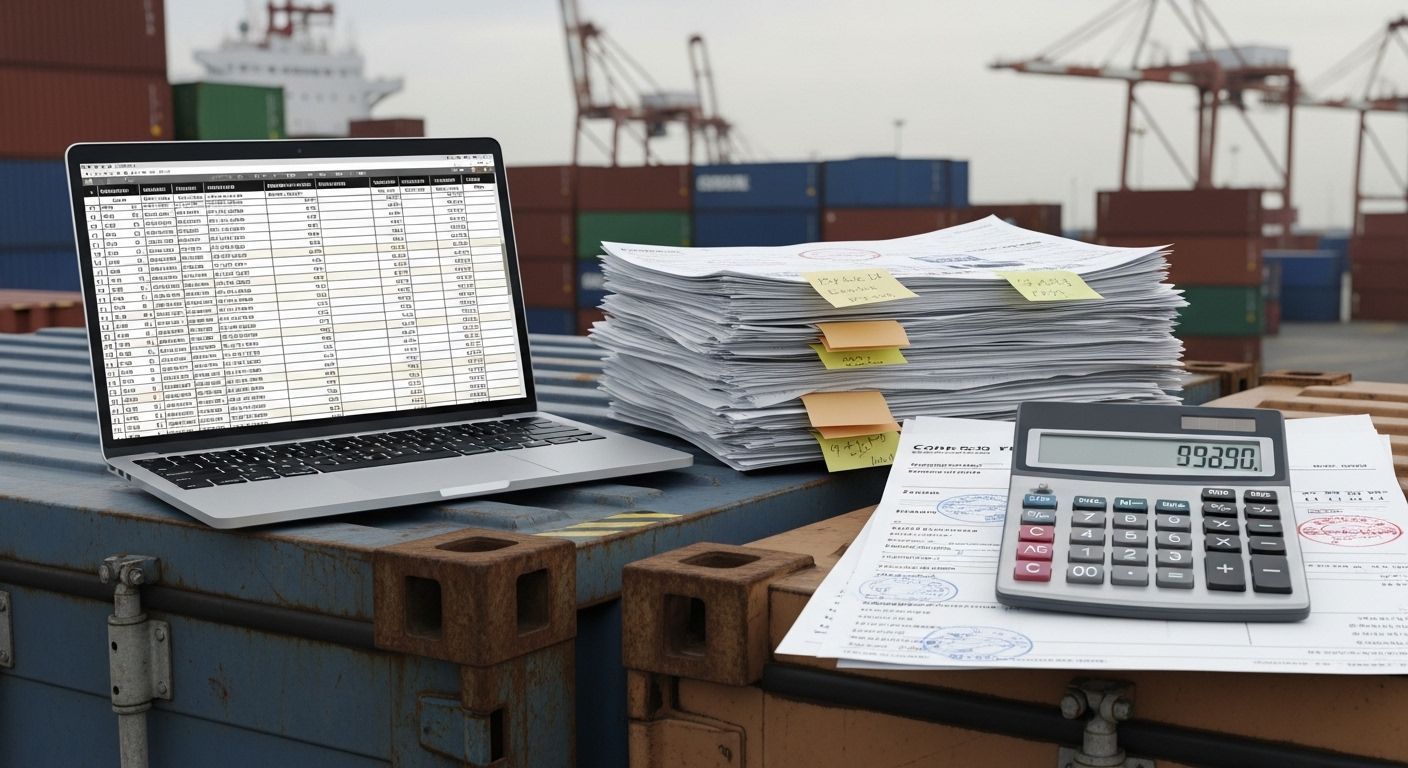
Learn how to calculate landed cost when importing from China to Australia. Include freight, duty, GST and local charges to protect your margins.
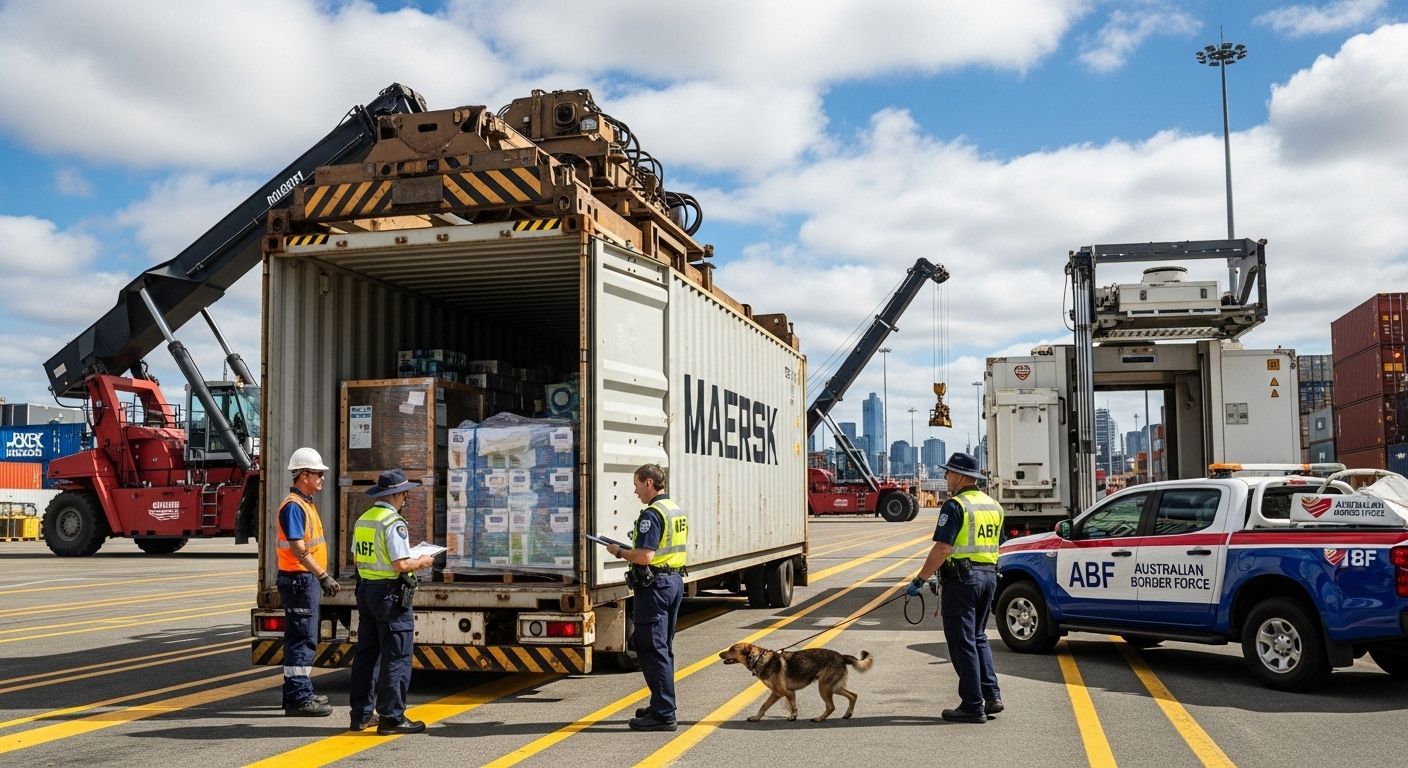
Understand the customs clearance process in Australia. Learn about duties, GST, import declarations and how to avoid shipment delays.
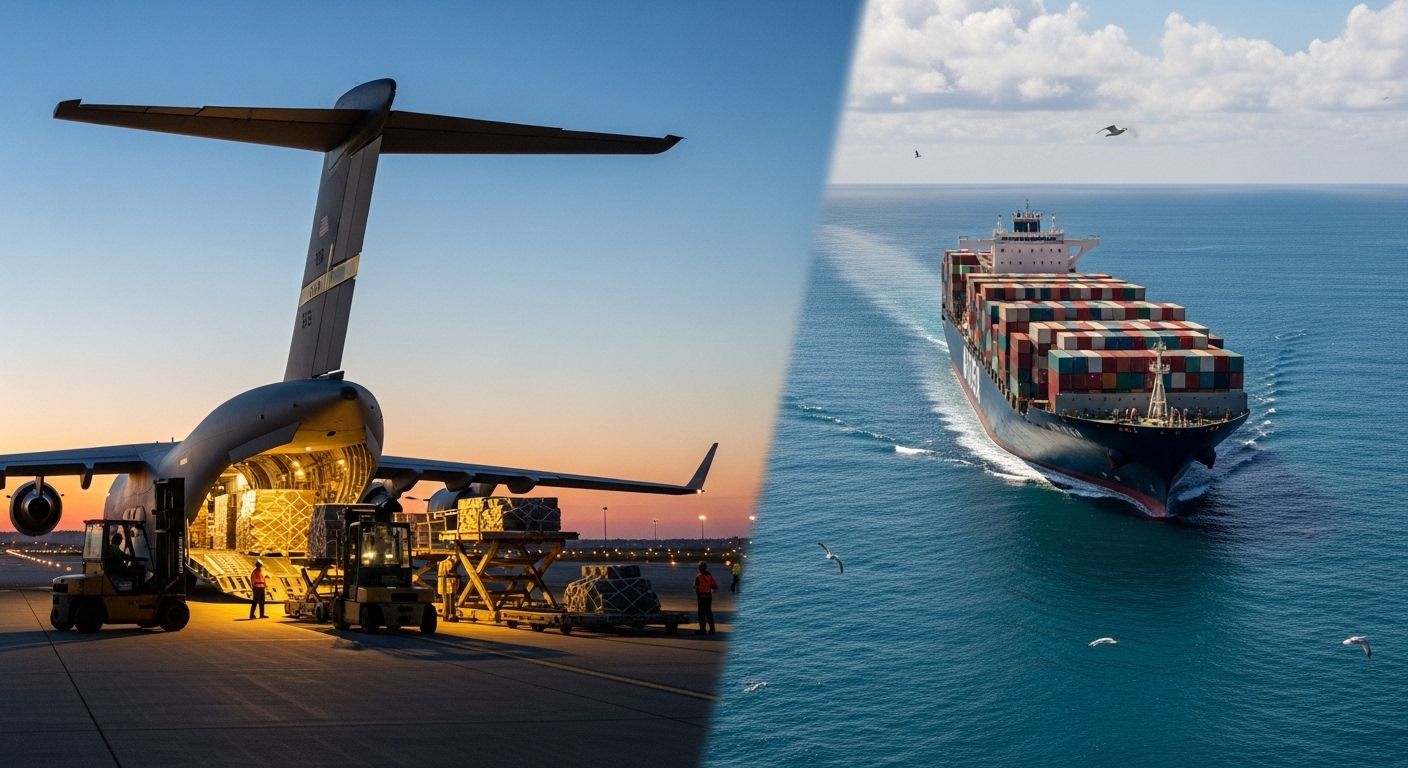
Compare sea freight and air freight from China to Australia. Understand costs, transit times and which option protects your margins.
Buying from Alibaba? Learn how to ship to Australia properly, avoid hidden freight costs, understand Incoterms and calculate landed cost before you import.
Learn how to import from China to Australia step by step. Understand freight options, customs clearance, duties, GST and landed costs in this complete 2026 guide.
What does a freight forwarder do in Australia? Learn how a freight forwarder manages sea freight, air freight, customs clearance and delivery.
I remember the first time a client came to us at Pivot Freight, looking slightly overwhelmed and clutching a folder full of documents they weren't quite sure what to do with. They were shipping their first container to Australia and had no idea where to start. The confusion on their face was something I'd seen dozens of times before—sea freight can feel incredibly complicated when you're new to it. But here's what I've learned after years in this industry: once you understand the process, it's far less intimidating than it seems. Yes, there are regulations and paperwork and logistics to consider, but that's exactly why freight forwarders like us exist—to guide you through it all. If you're planning your first sea freight shipment to Australia, let me walk you through what to expect. I'll break down the process, highlight the potential pitfalls, and hopefully make the whole thing feel a lot more manageable. You can also learn what a freight forwarder does here . Why Choose Sea Freight to Australia? Before we dive into the how, let's quickly talk about the why. Australia is an island nation, which means the vast majority of goods arrive by sea. While air freight exists for urgent shipments, it's expensive—sometimes prohibitively so. Sea freight offers a cost-effective solution for larger shipments, heavy goods, or items that aren't time-sensitive. I've worked with businesses shipping everything from machinery and building materials to furniture, retail stock, and personal effects. If you're moving significant volume or weight, sea freight is almost always the smarter financial choice. Yes, it takes longer—typically 2-6 weeks depending on your origin port—but the cost savings can be substantial. Understanding Your Shipping Options One of the first decisions you'll need to make is whether you're shipping a Full Container Load (FCL) or Less than Container Load (LCL). FCL means you're filling an entire container—usually a 20-foot or 40-foot container. Your goods are the only ones in that container, which means more security, less handling, and often faster transit times. If you have enough cargo to fill or nearly fill a container, FCL is usually the way to go. LCL means your goods share a container space with other shippers' cargo. This is ideal for smaller shipments that don't warrant a full container. The trade-off is that it typically takes a bit longer because the container needs to be consolidated at the origin port and deconsolidated in Australia, but it's much more economical for smaller volumes. At Pivot Freight, we help you assess which option makes the most sense based on your cargo volume, budget, and timeline. Sometimes the answer isn't immediately obvious, and that's where our experience comes in handy. Getting Your Documentation Right I won't sugarcoat it—documentation is probably the most tedious part of sea freight, but it's absolutely critical. One missing document or incorrect detail can delay your shipment for days or even weeks. Here's what you'll typically need: Commercial Invoice : This details what you're shipping, the value, and the terms of sale. It needs to be accurate because Australian Customs will use it to calculate duties and taxes. Packing List : A detailed breakdown of what's in your shipment—quantities, weights, dimensions. Think of it as the itemised version of your commercial invoice. Bill of Lading : This is your contract with the shipping line and proof of ownership. It's issued once your goods are loaded onto the vessel. You'll need this to claim your cargo in Australia. Import Permit (if required): Certain goods need special permits before they can enter Australia. This includes things like food, plants, wood products, and some types of machinery. Certificate of Origin : Sometimes required to prove where your goods were manufactured, which can affect duty rates. Quarantine Documents : Australia has incredibly strict biosecurity laws. If you're shipping anything organic, made of wood, or that's been near agricultural products, you'll likely need additional declarations or treatments. This is where working with Pivot Freight makes life easier. We review your documentation before submission, catch errors early, and ensure everything is compliant with Australian regulations. It saves you the headache of dealing with customs delays. Understanding Australian Customs and Biosecurity Let me be clear about something: Australia doesn't mess around when it comes to biosecurity. The country is an island ecosystem, and they're incredibly vigilant about preventing pests, diseases, and contaminants from entering. Your shipment will be assessed by the Department of Agriculture, Fisheries and Forestry (DAFF) before it's cleared. Containers are often inspected, fumigated, or even unpacked for examination. If your goods arrive in wooden crates or on wooden pallets, they must meet specific treatment standards (look for the ISPM 15 stamp). If they don't, they'll be treated in Australia at your expense, or worse, destroyed. I've seen shipments held up for weeks because someone didn't realise their packing materials needed treatment, or because they didn't declare that their machinery had been used in a farm environment. The key is full transparency and proper preparation. Once biosecurity is satisfied, the Australian Border Force handles customs clearance. They'll assess duties and taxes based on your commercial invoice and the Harmonised System (HS) codes for your goods. Getting these codes right matters—they determine how much you'll pay in import duties. Costs You Should Plan For Sea freight isn't just about the ocean freight rate. There are several other costs that catch first-time shippers off guard. Ocean Freight : The base cost of shipping your container from origin to destination port. Origin Charges : These might include container handling, documentation fees, and port charges at your departure point. Destination Charges : In Australia, you'll encounter port charges, container handling fees, and terminal access charges. Customs Clearance : Fees for processing your customs entry. Duties and Taxes : GST (currently 10%) applies to most imports, plus any applicable customs duties based on your goods and their origin. Quarantine Inspection and Treatment : If required, these costs can add up. Delivery to Final Destination : Getting your container from the port to your warehouse or premises. Demurrage and Detention : If you don't clear and return your container within the free time allowed, storage and rental charges kick in—and they're not cheap. At Pivot Freight, we provide transparent quotes that break down all these costs upfront. The last thing we want is for you to be hit with surprise fees you weren't expecting. The Journey: What Happens When Let me walk you through a typical timeline so you know what to expect. Booking and Documentation (1-2 weeks before sailing) : You confirm your shipment details with us, we book space on a vessel, and we work with you to get all documentation ready. Container Loading : Your goods are packed into the container either at your facility (if you're doing FCL) or at a consolidation warehouse (for LCL). Port Departure : The container is delivered to the origin port, loaded onto the vessel, and begins its journey. You'll receive a Bill of Lading at this stage. Ocean Transit (2-6 weeks) : Your container crosses the sea. Transit times vary depending on origin—shipments from Asia typically take 2-3 weeks, from Europe 5-6 weeks, from the US West Coast around 2-3 weeks. Customs and Quarantine Clearance : At Pivot Freight, we aim to have custom clearance lodged 5 days prior to arrival. Your documentation is assessed, Import GST & duties are calculated, then our invoice is issued. Payment is due prior to vessel arrival. Arrival at Australian Port : The vessel arrives, and your container is unloaded. Release and Delivery : Once cleared, your container is released and delivered to your final destination. Throughout this entire process, we keep you updated. You'll know when your container is loaded, when it sails, when it arrives, and when it's ready for collection. Transparency is key—we've all experienced the frustration of not knowing where something is or when it'll arrive. Common Pitfalls and How to Avoid Them After years of doing this, I can tell you the most common issues we see with first-time shippers: Incomplete or inaccurate documentation : Double-check everything. One typo in a product description can cause delays. Undervaluing goods : Some people are tempted to declare lower values to reduce duties. Don't. Australian Customs is sophisticated and can impose penalties for undervaluation. Not understanding HS codes : These determine your duty rates. Get them wrong and you might pay more than necessary—or face delays while customs queries the classification. Ignoring biosecurity requirements : If there's any chance your goods or packaging have been exposed to soil, plants, or agricultural environments, declare it and get proper treatment. Poor packaging : Goods damaged in transit are your responsibility. Invest in proper packing materials and securing your cargo within the container. Not planning for delays : Build buffer time into your plans. Unexpected inspections, weather delays, or port congestion can happen. Waiting too long to arrange clearance : Start the customs clearance process before your container arrives so it's ready to be released as soon as it's available. How Pivot Freight Makes This Easier I realise I'm biased, but there's a reason businesses use freight forwarders instead of managing international shipments themselves. The logistics, regulations, and coordination required are genuinely complex. At Pivot Freight, we handle the heavy lifting. We book your shipment, prepare and submit documentation, liaise with shipping lines, coordinate customs clearance, arrange quarantine treatments if needed, and organise final delivery. We have relationships with carriers, understand Australian regulations inside and out, and can anticipate problems before they become costly delays. More importantly, we're here to answer your questions. No question is too basic—we'd rather you ask than make a costly mistake. Whether it's your first shipment or your hundredth, we treat every client with the same attention and care. If you're planning a shipment and feeling a bit overwhelmed, reach out to us at Pivot Freight. We'll walk you through every step, answer all your questions, and make sure your goods arrive in Australia smoothly and on time. After all, getting your products where they need to be is what we do best.