Who’s really handling your freight? It’s a longer list than you think.
From your overseas supplier’s door to yours, there are more hands on your shipment than you might realise.
You’ve paid your supplier. Your goods are ready to ship. The tracking says “on its way.”
Simple, right? Not quite.
International freight is a little like a relay race. Every runner is a different company, often in a different country, with their own deadlines, rules, responsibilities and, yes, their own charges.
And unlike a relay race, you can't always see who's holding the baton.
So, who actually handles your freight between your supplier's factory and your warehouse in Australia?
Let's break it down.
🚢 Before your goods leave
1. Your overseas supplier
This is where it all begins. Your supplier manufactures or prepares your goods, packs them and provides essential shipping documents, including the commercial invoice and packing list. Get these wrong and the problems can follow your shipment all the way to Australia.
2. Your freight forwarder and their origin partner
This is where we come in. Your freight forwarder coordinates the journey, working with overseas partners to arrange bookings, confirm cargo readiness, check documentation and manage the moving parts. Think of us as the team managing the relay, making sure everyone knows when it's their turn to run.
3. The consolidator or co-loader – when you're sharing a container
Not every importer needs a full container. For smaller shipments (LCL), a consolidator combines cargo from multiple importers into one container, allowing each business to pay for the space it uses. Sometimes another freight provider, known as a co-loader, is involved in arranging access to that consolidation service. There are additional handling and unpacking steps involved, which is why LCL shipments have a different cost structure from FCL shipments (Full container loads)
4. The origin transport provider and origin port terminal
Your cargo needs to reach the port of export or consolidation depot, also called a CFS (Container freight Station) before the relevant cut-off. Miss that deadline and your shipment could miss its intended sailing. One small delay at origin can have a knock-on effect weeks later.
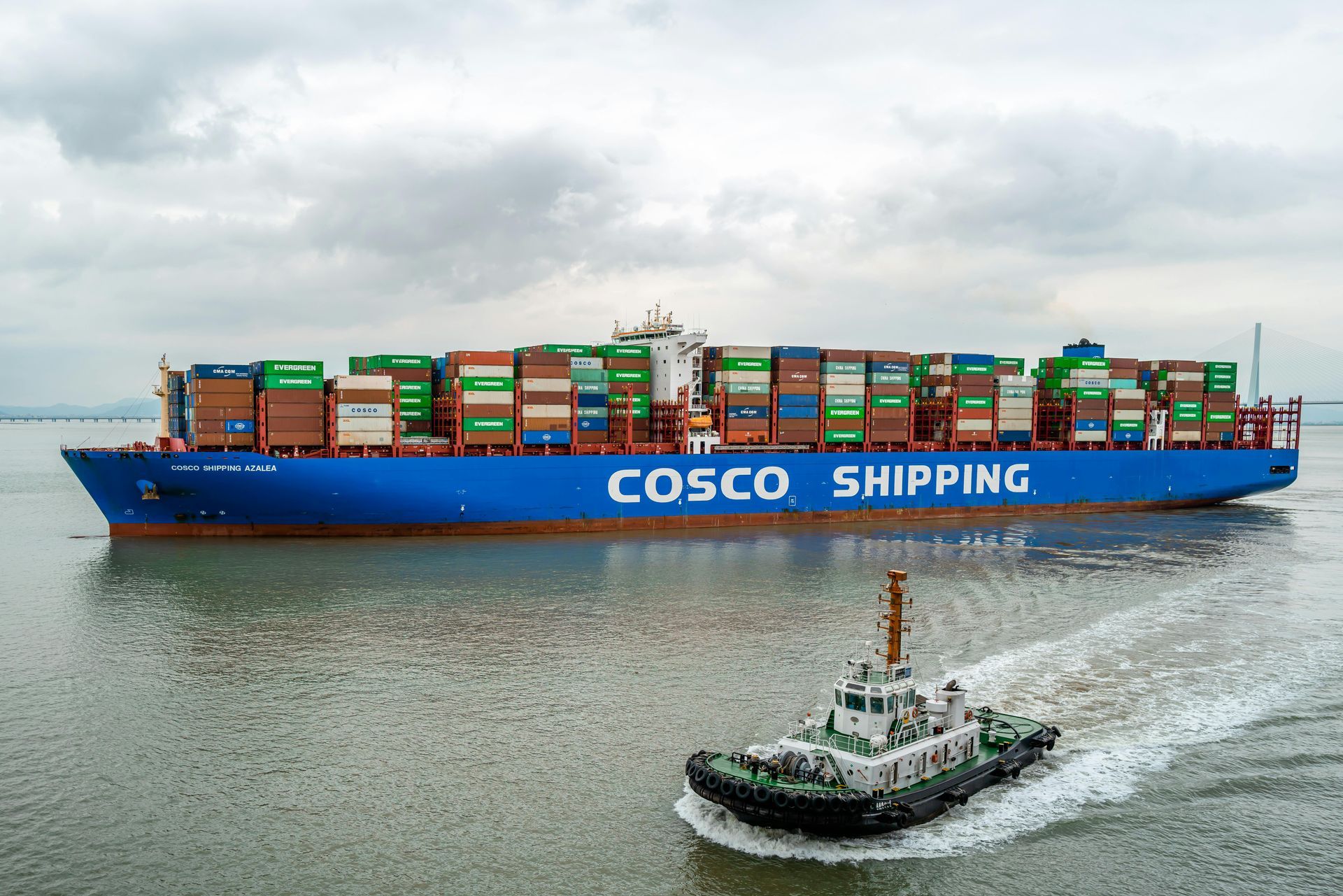
5. The shipping line – the actual ocean journey
This is the company operating the vessel that carries your container from Port A to Port B. The shipping line is responsible for transporting the shipping container between the agreed ports, and this is where the ocean freight charge comes into play. But here's something worth understanding:
Ocean freight is only one part of your total shipping cost.
The rate you see advertised for moving a shipping container across the ocean doesn't necessarily include origin handling, destination charges, customs clearance, biosecurity requirements or delivery to your warehouse.
That's why comparing two quotes based purely on the ocean freight rate can be misleading.
🇦🇺 When your shipment arrives in Australia
6. The Australian port terminal
The vessel arrives, containers are discharged and the terminal manages their availability for collection. But just because your vessel has arrived doesn't mean your container is immediately ready to collect. There are terminal processes, release requirements, collection windows and free-time deadlines to consider.
7. Australian Customs and your customs broker
A licensed customs broker prepares and lodges the import declaration, determines the applicable tariff classification and manages the customs clearance process, including any duty and GST payable. Here's something many importers don't realise:
Customs clearance doesn't have to wait until your goods physically arrive into Australia.
With the correct documentation, much of the clearance process can be completed before the vessel reaches Australia. That's why we place so much importance on getting documents early.
8. Biosecurity (DAFF)
Australia has strict biosecurity requirements. Depending on the goods, packaging, country of origin and applicable regulations, your shipment may require documentary assessment, inspection, treatment or other biosecurity action. This can add time and costs that aren't always known before the shipment arrives. It's also why something as simple as untreated timber packaging or an incorrect declaration can become a very expensive problem.
9. The transport company
For a full container, the transport provider needs to arrange collection from the terminal and delivery to the nominated destination. But they can't simply turn up whenever they like. They need terminal access, an available collection slot, the appropriate releases and a delivery arrangement that works for the receiving location. If one part isn't ready, the rest can be delayed.
10. The unpack depot (for LCL shipments)
If you're importing a smaller shipment, your goods will generally travel to a Container Freight Station (CFS), where the shared container is unpacked. Your cargo is then made available for collection or onward delivery, subject to clearance and release requirements. These facilities have their own handling charges, operating procedures and collection deadlines.
11. The shipping line makes another appearance
For FCL shipments, the journey doesn't necessarily end when the container reaches your warehouse. The empty container still needs to be returned to the nominated depot within the allowed free time. And that's where three terms every importer should understand come into play:
- Storage: Charges for cargo or containers remaining at a terminal or depot beyond the applicable free period.
- Demurrage: Charges generally associated with keeping a shipping line's container at the terminal beyond the allowed free time.
- Detention: Charges generally associated with holding a shipping line's container outside the terminal beyond the allowed free time.
Different charges. Different triggers. And potentially significant costs if deadlines are missed.
So, why does all of this matter?
Because your shipment doesn't move through one company. It moves through a network of businesses, government agencies, systems and people. And when one link slips, the next one feels it.
A late supplier can mean a missed vessel.
A missing document can delay clearance.
A biosecurity hold can disrupt delivery plans.
A missed transport slot can lead to additional charges.
During peak season, when everyone is working against tight schedules, these small delays can become much bigger problems.
and this is where I think importers sometimes get caught out...
When comparing freight quotes, it's easy to assume every freight forwarder is offering essentially the same service. After all, the container is travelling on the same ocean, often on the same shipping line, sometimes even on the same vessel.
So why are the quotes different?
Because you're not just paying to move goods from Port A to Port B.
You're also paying for the expertise, coordination, communication and problem-solving that goes into managing everything around that journey.
And not every freight forwarder approaches those responsibilities in the same way.
Some quotes may include services that others charge separately. Some may be based on different shipping routes, transit times or service arrangements. And the level of proactive communication and shipment management can vary considerably.
The cheapest freight quote isn't always the cheapest shipment.
That doesn't mean the most expensive quote is automatically the best either. It means you need to understand what you're comparing.
At Pivot Freight, my team's job isn't simply to book your cargo onto a ship.
It's to connect the moving parts, keep you informed, anticipate potential issues and help you understand the costs and decisions along the way.
Because every charge on your quote should have a reason. And if we can't explain it in plain English, we haven't done our job properly.
This is why choosing a freight forwarder shouldn't just be about finding the cheapest ocean freight rate.
It's about understanding who's coordinating the entire journey, who's anticipating the next step and who's communicating with you when something changes.
⚓ One thing to take with you this week
Before your next shipment leaves your supplier, ask your freight forwarder three questions:
- Who's responsible for each stage of my shipment?
- Which charges are confirmed, and which could change?
- What needs to happen before my goods can be delivered in Australia?
You don't need to become a freight expert.
But you should know who's managing the journey, what you're paying for and what could affect your delivery. That's how you ship smarter.
Have an upcoming shipment and want to understand the full journey before it moves?
Book a call with Pivot Freight - because the earlier we get involved, the more options we have to help you avoid unnecessary surprises.
Until next time,
Christine Kankkunen Founder, Pivot Freight Solutions
Ship Smarter